Alterist makes upcycling too cool to ignore
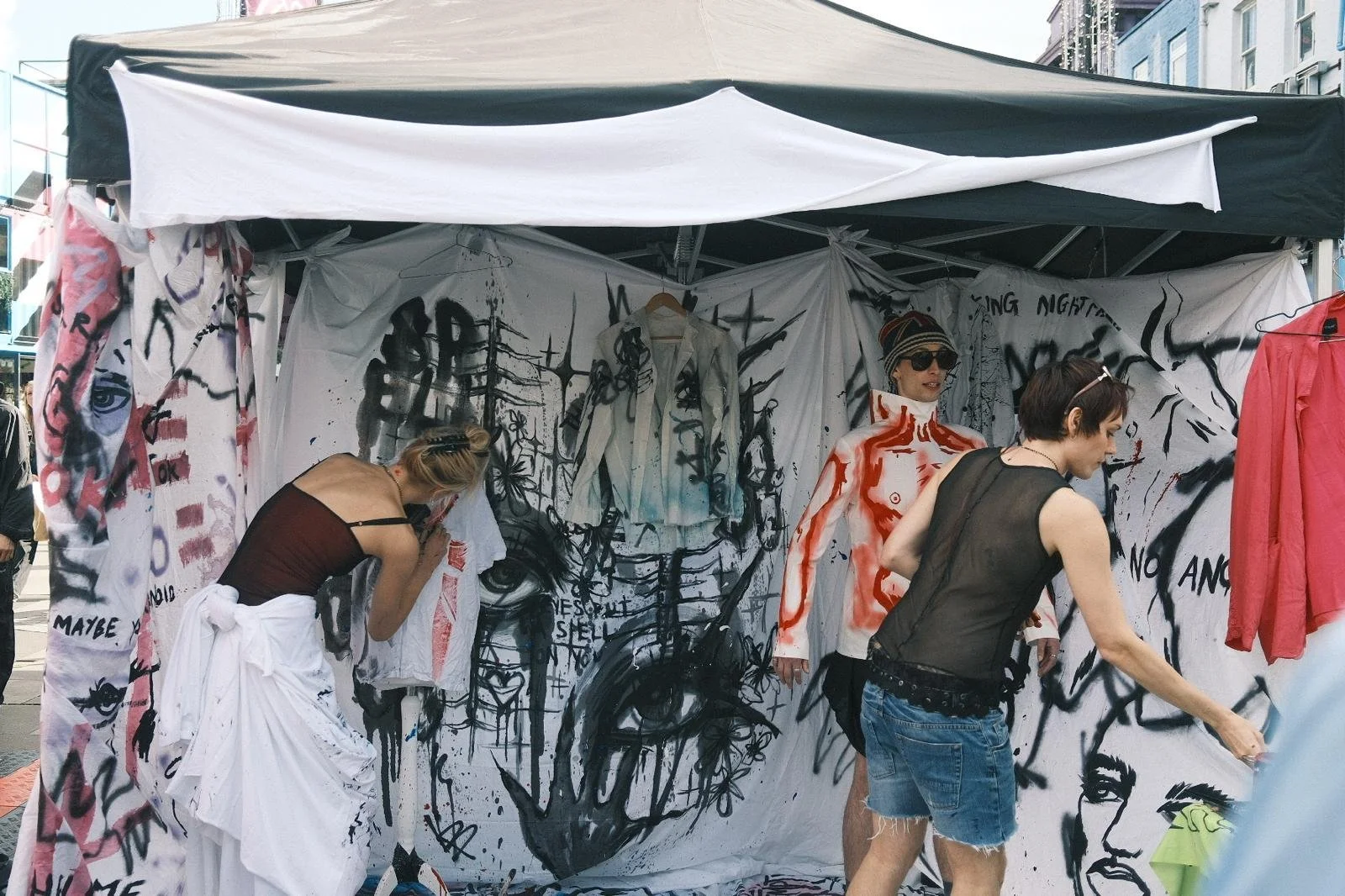
Bringing live customisations at Camden High Street, as part of Camden at 60: Camden Catwalk
One of my favourite wardrobe pieces is a white v-neck t-shirt customised by London-based artist and designer Olli Hull. My brief at the time was “do whatever you like to it.” The young designer, who creates one-off handpainted garments from reclaimed and discarded clothing, covered the t-shirt with images and a slogan that pretty much sums me up: “Stop Killing Everything.” I’m still not sure how he knew.
Hull is just one of over 200 creatives listed with Alterist, which works with upcycled designers to recapture and upcycle pre-loved clothing. Launched in 2022 by activists Hannah Standen and Martina Sorghi, Alterist has been quietly shifting perceptions of recycled and upcycled fashion by making it too cool to ignore.
So cool in fact that, for two weeks last September, Alterist took over a section of the Accessories Hall in Selfridges as part of Second Hand September, hosting a working studio where making, conversations and creativity sat side by side in one of the world’s most high profile department stores.
Alongside its online repository of customised pieces by its designers, pop-ups have been Alterist’s stock in trade. Whether it’s kicking off London Recycles’ Repair Week 2026 with a workshop led by Kabo Clothing, bringing live customisations to Camden High Street, as part of Camden at 60: Camden Catwalk - or teaming up with designer Byeanna to host a Sip and Stitch at the Absinthe Parlour,Alterist pop-ups are lively, edgy, tracked by live DJS, surrounded by art installations and rails of upcycled clothing - and, of course, designers giving old clothes new life. On the day I asked Olli to upcycle my t-shirt, he was sitting at an Alterist residency at Camden Open Air Gallery, alongside other makers; everyone busily sewing patches onto trousers, stitching, darning or thrumming away on sewing machines; chatting and laughing with customers.
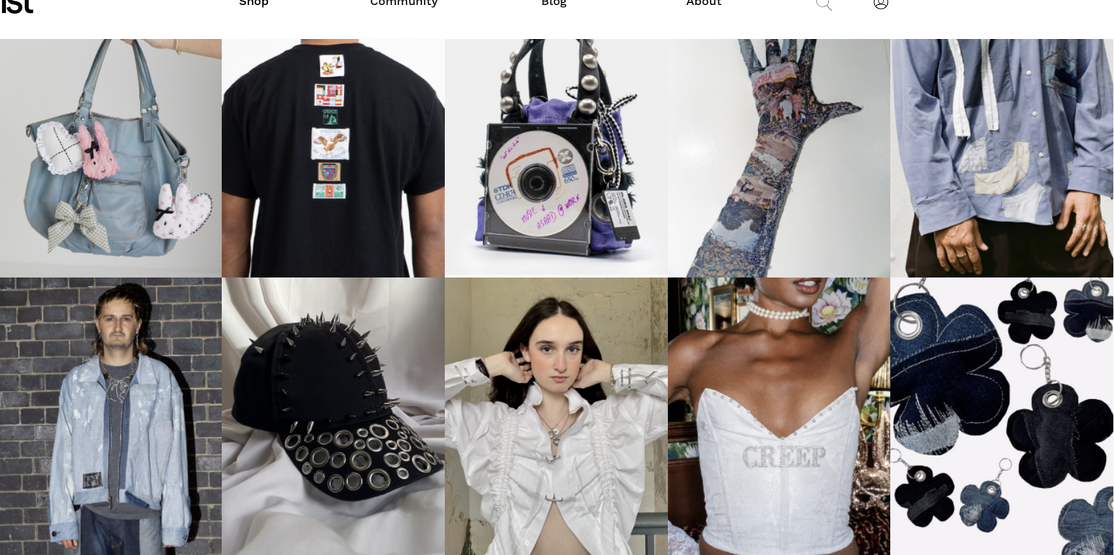
Alterist works with upcycled designers to recapture and upcycle pre-loved clothing.
It sounds effortless; it hasn’t always been. “Four years ago, upcycling wasn't even a word that people knew,” says Sorghi. “Now, it's more accepted. A few designers are showing upcycled stuff on catwalks - and that’s good news.” It certainly is. Shows for this season offered upcycled linen at Gabriela Hearst; vintage by up-and-coming Rory William Docherty and remade trench coats and wedding dresses, embroidered with vintage thimbles, by Patrick McDowell. If the future is not quite here, it’s certainly emerging and Alterist is part of that story.
Now, Alterist is opening a concept store of its own at buzzy Netil Market in London Fields and looking to broaden and deepen the work - making creative, sustainable use of their craft network. New designers join the line-up: Maydebymay, who specialises in upcycled football t-shirts; printer and painter extraordinarie Dorota Bojanowska; tie specialist Kabo and hand beader Imogen Fawkes join the line-up.
One of the pivot points for future work is brand team-ups. “We launched from B to C but for the past 12 months, we’ve been focusing on collaborations, finding out how to work with brands at the source of their waste by offering them creative solutions,” explains Standen.
This has always been part of the vision but regulatory requirements have made the case unavoidable. The EU Waste Framework Directive has introduced the ‘polluter-pays principle’ whereby the original waste producer must pay for the cost of waste management as well as Extended Producer Responsibility (EPR), which makes producers responsible for the end-of-life management of their products; all EU states must have fully operational national textile EPR schemes by 2027. At the same time, fashion brands operating in the EU must have Digital Product Passports (DPPs) in place for textiles, covering traceability and material composition, by late 2027 to 2028.
It’s a lot for brands to tackle; a direct challenge to current cultures of make, sell and chuck. “Previously, waste would have been exported overseas, out of sight, out of mind,” explains Standen. “Now, rather than covering the cost of storing, disposing or donating excess stocks, brands are a lot more open to recycling.” Overproduction is endemic. Alterist is currently working with a sportswear brand that distributes post-event t-shirts. “As much as they try to produce the right amount, they always end up with extra,” says Standen. “So we're turning that into a new line.”
The pair have worked with brands before. Two years ago, they turned faulty baby wear into new garments and, more recently, transformed t-shirts with a series of prints inspired by the Our Planet Needs You (OPNY) storybook, illustrated by street artist Kleemu, as part of a Traid x Alterist x OPNY partnership. When reLondon wanted 100 tote bags to gift into schools across London, Standen and Sorghi picked four designers to produce 25 each. With larger quantities, the duo will reach for external partners. There’s a new energy now and a hundred ways to do it well.
Collecting data is key to demonstrating results. “We try to show that, by working with us, you've been able to save this much material from landfill, this much CO2, this much water from the production of new raw materials, etc,” says Standen. “Brands are having to report on their impact. If we can prove that upcycling can help that, we're only going to start to see it implemented more and more.”
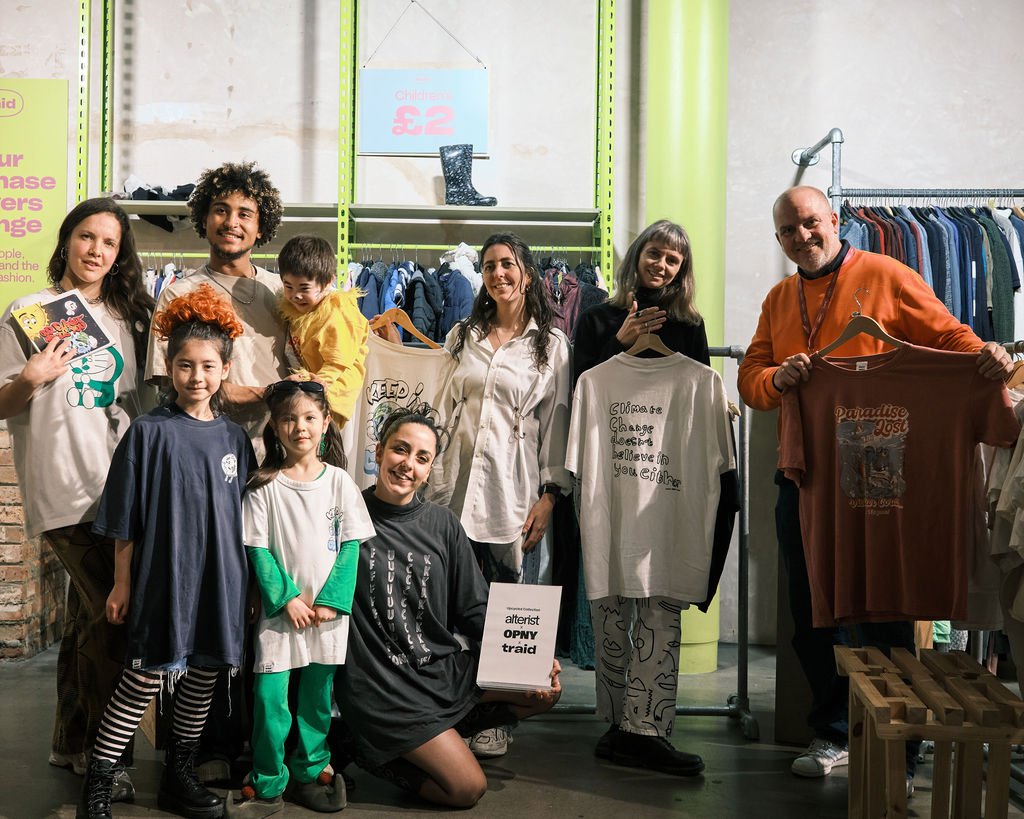
Traid x Alterist x OPNY
But, for all the talk about sustainability, fashion still operates according to the dominant growth model; as an example, articles on planetary tipping points incongruously run next to plugs for new bridalwear in this week’s Vogue Business. “People still want cheap clothes, because they don't realize the sheer amount of effort that goes into making a piece of clothing,” comments Sorghi. Alterist counters this by mixing those stats (putting the time a designer has spent on a piece on the label, for example) with positive messaging and bringing designers to the front of the work.
This is a lesson honed in the pair’s past experiences in activism (disclaimer: we were all part of Extinction Rebellion Fashion). “If you make people feel guilty [about their shopping habits], it makes people shut down,” says Standen, thoughtfully. “But if you go, oh my gosh, look at what’s gone into this piece of clothing, a switch flicks in their brain. When someone's able to see the effort and the creativity, they start to understand that they can still be part of fashion but in a more sustainable way. It’s these subtle educational elements woven into our messaging that hopefully starts to change habits, adds value to the designers and helps them get paid fairly.”
Alongside the concept store, Alterist will continue to host pop ups; the next one takes place at London School of Economics while another department store is interested; a return visit to Selfridges may be in the pipeline. You sense that for brands, organisations and designers, Alterist is something of a life line; a bridge between good intentions and what’s actually possible. “There's lots of legal, commercial responsibilities that go into bringing a designer into work with a large organisation,” says Standen. “We can streamline the process, take a lot of tricky things out for the designer and make it easier.”